
Critical Programme Decisions
Make the right call before it becomes expensive to reverse.
Independent senior judgement for critical aviation and defence programme decisions — while the options can still be meaningfully assessed and changed.
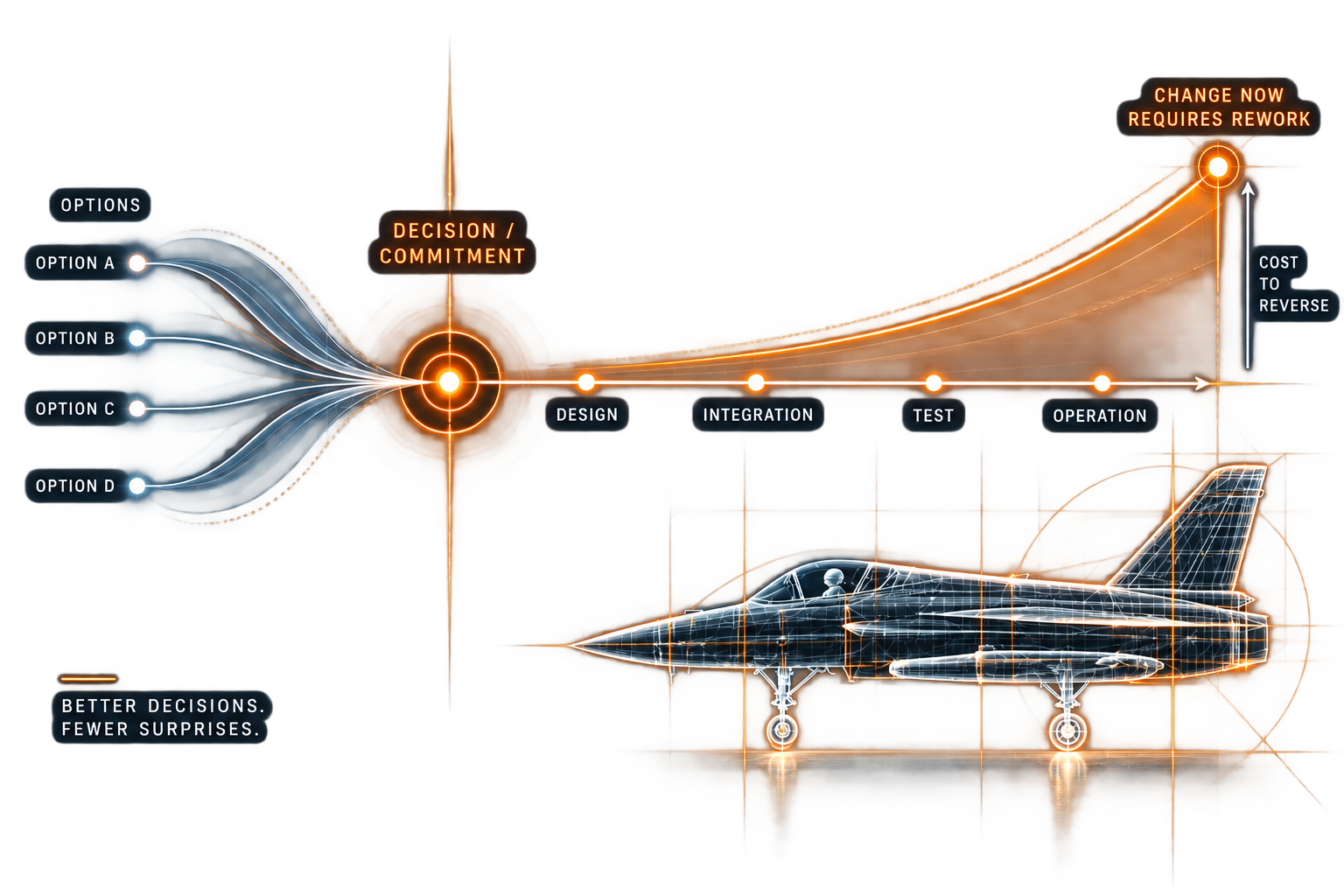
Some decisions are hard to reverse. Others are just expensive.
Decisions are made on plausible assumptions and the evidence available at the time. Once a decision is made, the available options can narrow — while consequences for integration, test and evidence may only become visible later.
When this is relevant
Typical situations.
- 01
A design or integration decision is due, and changing it later could affect integration, test scope or programme timing.
- 02
A decision has implications for integration, flight test or airworthiness that need to be understood before commitment.
- 03
Different functions each have a defensible position, and the trade-off between them has not been made explicit.
- 04
An independent senior perspective would strengthen the basis for a decision before commitment.
What makes the difference
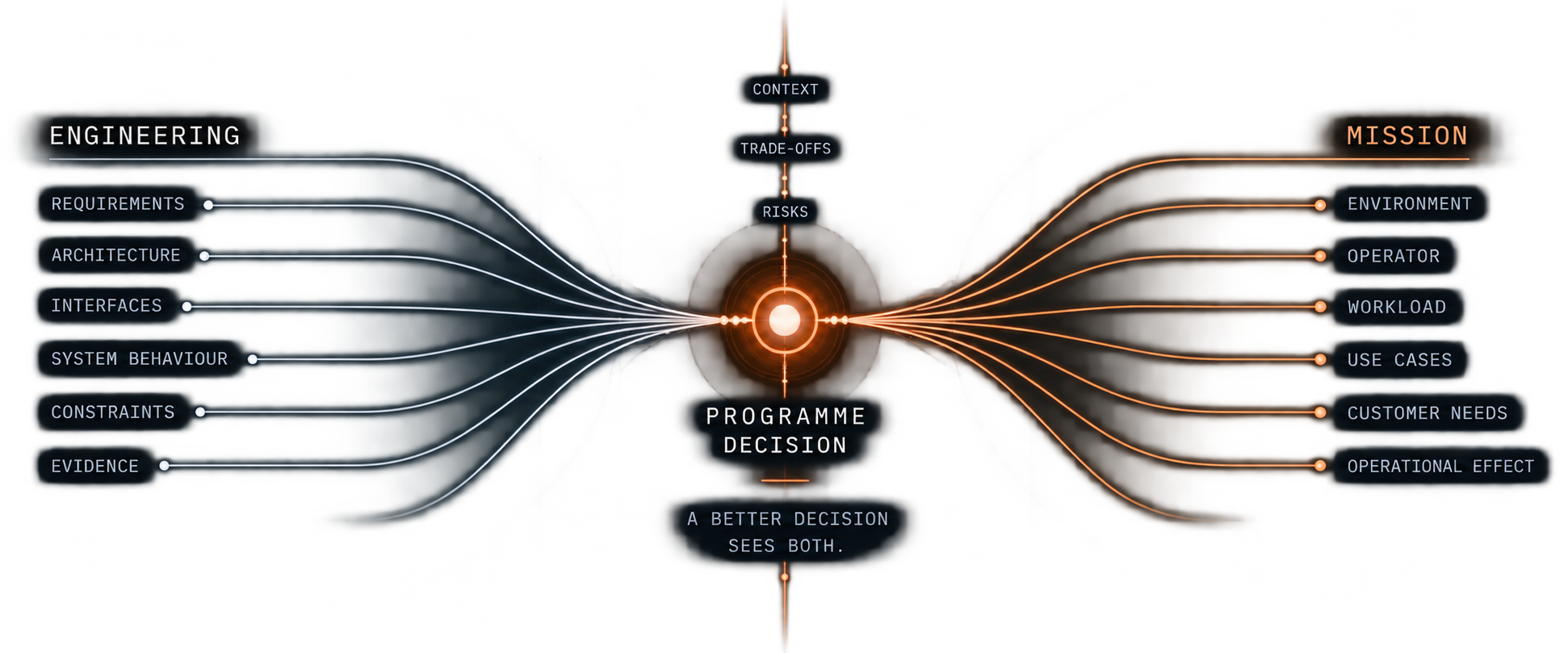
One view across engineering, mission and evidence.
A stronger decision basis comes from considering three things together: what the engineering and system logic allow, how the result will be operated and used, and what the choice means for integration, test and airworthiness evidence. Bringing these perspectives together makes assumptions, trade-offs and consequences easier to assess before the decision is made.
Experimental Test Thinking
Which assumptions is this decision resting on?
Experimental test thinking makes assumptions explicit, turns uncertainty into questions that can be investigated, and clarifies what evidence is still needed. Applied to a critical programme decision, it helps identify what the decision depends on before commitment makes the available options harder to change.
Output
A clearer basis for the decision.
An independent read on the technical and operational basis of the decision.
The assumptions the decision depends on, made explicit.
Implications for integration, test and airworthiness evidence.
Where reversibility is limited, and what changing course later could involve.
How it starts
A bounded independent review of the decision at hand.
A short, clearly scoped engagement focused on one pending decision: senior review of the basis, the assumptions it rests on, and the implications for integration, test and evidence.
Where useful, support can continue as ongoing senior advisory alongside the programme or as focused support on a specific technical or operational question.
Discuss a pending decisionDiscuss the decision before commitment.
Describe the decision in one or two sentences. If an independent perspective would help, we will say so — and if it would not, we will say that too.
Start a confidential conversation