
From Technology to Operational Capability
Turn strong technology into capability operators will trust and use.
Independent senior judgement for technically strong defence-technology teams moving from prototype towards operational capability.
How this works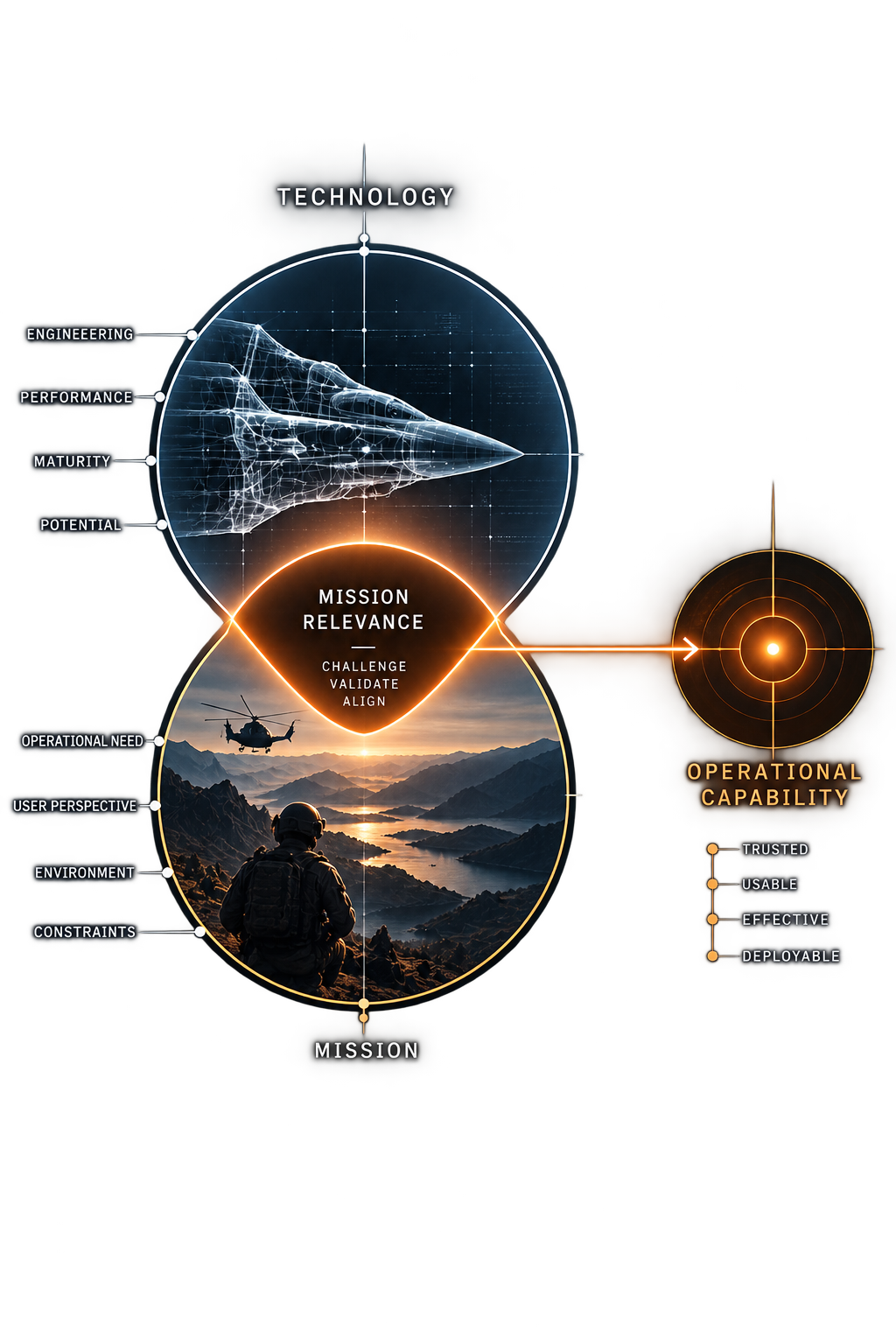
The technology is rarely the whole question.
Moving from a working product towards operational capability also means understanding its mission relevance, how operators will interact with it in real use, and which assumptions the product depends on.
When this is relevant
Typical situations.
- 01
Product decisions are being made while mission context, operator interaction or customer relevance still need to be better understood.
- 02
The product works in demonstration, and the step towards real operational use is not yet fully worked through.
- 03
Assumptions about how the capability will be used have not yet been made testable.
- 04
The product is still adaptable, and important assumptions can still influence its direction.
What makes the difference
Product intent, real use and evidence — considered together.
Engineering and product intent define what the technology is designed to do. Mission, operator and customer reality provide the context in which the capability needs to be relevant and usable. Making the assumptions between them explicit and testable helps identify what evidence is still needed while the product can still be meaningfully changed.
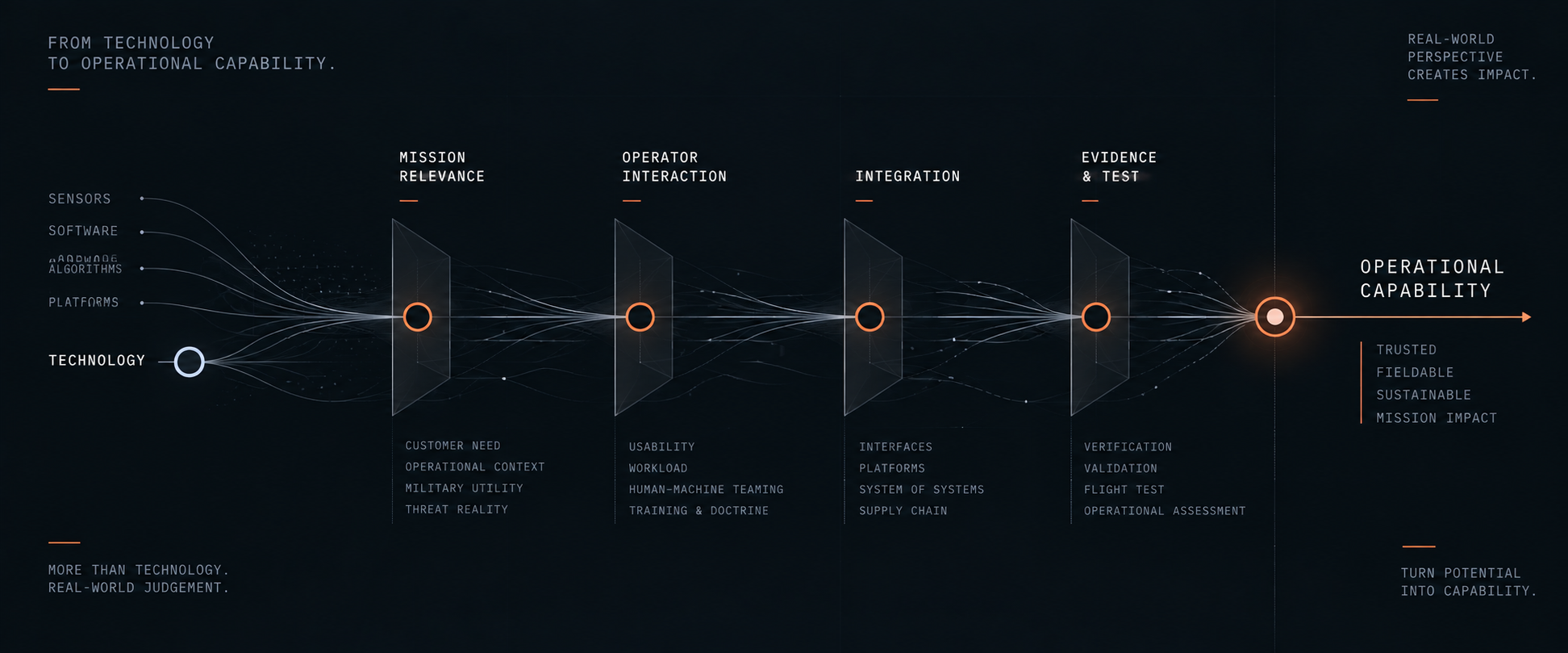
Experimental Test Thinking
Which assumptions still need to be tested?
Experimental test thinking makes assumptions explicit, turns them into questions that can be investigated, and clarifies what evidence is still needed. Applied to a developing product, it helps examine assumptions about mission, operator and use while the product can still be meaningfully changed.
Output
A clearer basis for product and capability decisions.
An independent read on mission relevance and operational use.
Assumptions about mission, operator and environment that need to be made testable.
Where relevant evidence is still needed and how it could be generated.
Where product direction and real operational use may not yet align.
How it starts
A bounded independent review of operational relevance.
A short, clearly scoped engagement focused on the product: senior review of mission relevance, operator use, the assumptions it depends on, and where relevant evidence is still needed.
Where useful, support can continue as ongoing senior input into product and capability decisions or as focused support on a specific operational or test question.
Discuss your productWhile the product is still easy to change.
Describe what you are building and where it is heading. If an independent senior perspective would help, we will say so — and if it would not, we will say that too.
Start a confidential conversation